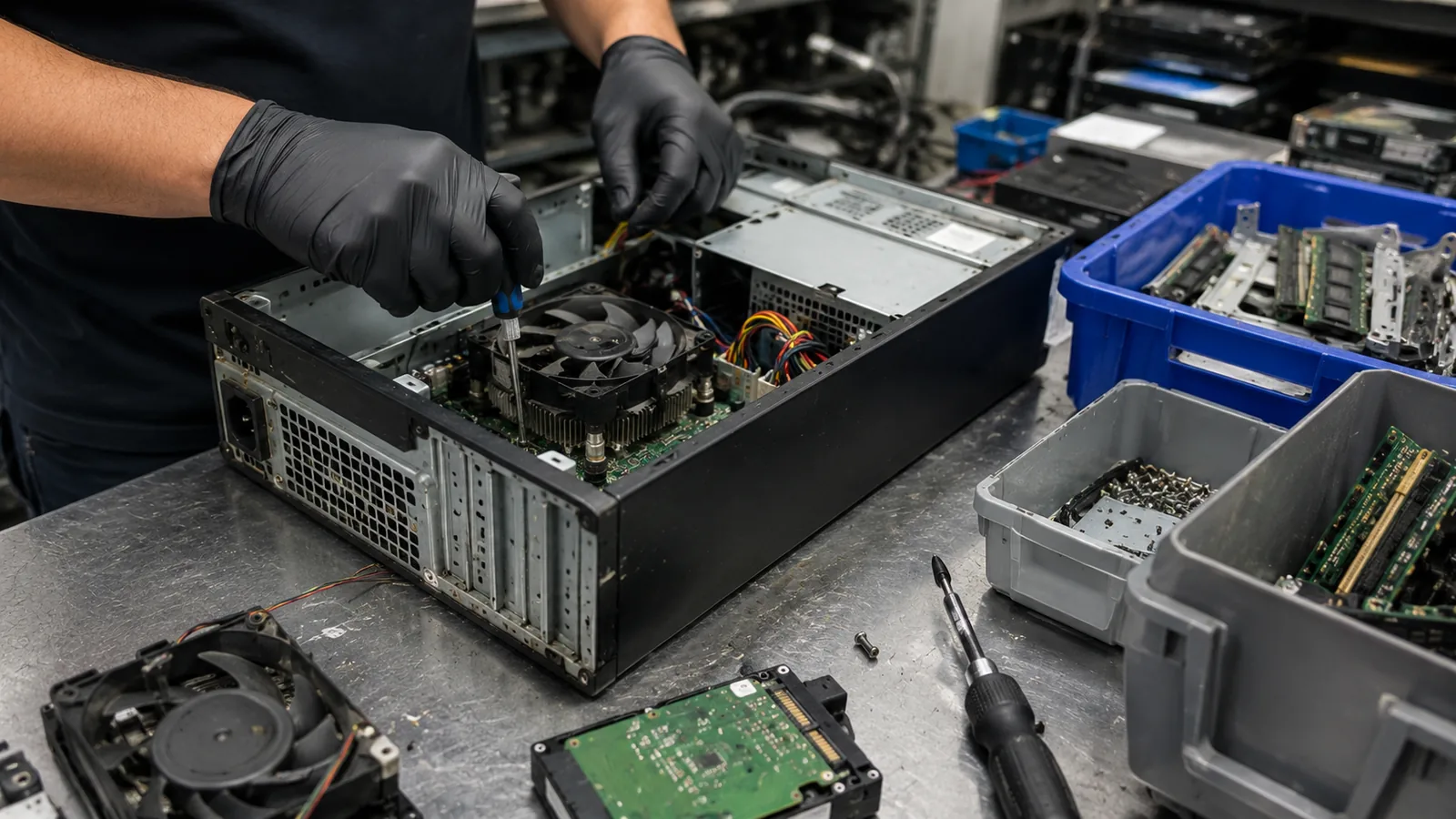

Technician in protective gloves disassembling a computer for secure processing
Healthcare Organizations

HIPAA-Compliant Electronics Disposal for Healthcare

Certified physical destruction of ePHI-bearing devices with chain-of-custody documentation, destruction certificates, and BAA execution for hospitals, clinics, and medical offices.

HIPAA Security RulePhysical safeguard standard
ePHI destroyedPhysical shredding only
BAA availableCovered entity ready
Clinical site pickupMulti-location scheduling
The Risk

One unwiped drive can contain thousands of patient records

$10.93M
Average cost of a healthcare data breach — the highest of any industry
IBM Cost of a Data Breach Report, 2024
$1.9M
Maximum HIPAA civil penalty per violation category per year
HHS Office for Civil Rights — HIPAA Enforcement
#1
Healthcare has been the most-breached industry for 14 consecutive years
IBM Cost of a Data Breach Report, 2024
PHI Destruction That Survives an Audit

The certificate OCR actually wants to see

A single unwiped hard drive from a retired workstation can contain thousands of patient records. HIPAA's Security Rule requires covered entities to certifiably dispose of ePHI — and the Certificate of Destruction is the standard evidence that destruction occurred when HHS's Office for Civil Rights comes asking.

AVA Recycling provides certified physical destruction for computers, servers, laptops, tablets, and specialized clinical equipment retired by hospitals, multi-site medical groups, outpatient clinics, dental offices, and behavioral health providers across the Chicago metro area. Every pickup generates a Certificate of Destruction and, for covered entities, we execute a BAA as required under HIPAA's business associate provisions.

Physical shredding is not optional for SSDs — software wiping cannot reliably erase flash memory in solid-state drives. Our process applies physical destruction across all drive types so no asset leaves your control with recoverable data, regardless of media type.

Organized server inventory at an electronics recycling facility
Healthcare Asset Retirement

Protect patient information from the workstation to the loading dock

A HIPAA-ready disposal plan combines physical destruction, controlled logistics, and documentation your privacy team can retain.

01

ePHI can exist in more places than the EMR server

A healthcare asset list should include every device that stored, displayed, printed, transmitted, or cached patient information. That may include nursing-station workstations, laptops, tablets, imaging workstations, label printers, multifunction copiers, backup drives, network appliances, and removable media. A device does not stop being a protected asset because it is old, broken, or being replaced during a renovation.

AVA works with hospitals, clinics, dental offices, behavioral-health providers, and multi-site medical groups to identify the devices that need certified physical destruction. Equipment that does not contain ePHI can still be recycled through the same project, while data-bearing components receive the destruction and documentation your compliance team expects.

  • Workstations, laptops, tablets, servers, and imaging equipment
  • Copiers, scanners, printers, networking devices, and backup media
  • BAA execution available when the project involves ePHI access
02

Coordinate around clinical operations

Healthcare pickups need to respect patient care, infection-control procedures, loading-dock rules, and multi-site scheduling. A practical plan identifies the facility contact, pickup window, staging area, and equipment list before the crew arrives. That keeps retired assets out of hallways and clinical work areas while giving IT and facilities teams a clear handoff.

For an EMR migration, clinic closure, or rapid office transition, the project can be organized by site or department. Every load receives a Certificate of Destruction, with serial-number inventory available when your asset-management or compliance program requires device-level evidence. Recycling records can be retained alongside the destruction certificate for a complete closeout file.

  • Pickup windows coordinated with facility managers
  • Chain of custody begins at the clinical site
  • Certificates and inventory organized for the compliance file
Clinical Site Controls

Keep the disposal process as disciplined as the patient-data workflow

Healthcare equipment retirement requires coordination between IT, privacy, facilities, and the clinical team—not just a truck appointment.

01

Map the ePHI-bearing equipment

Begin with the clinical and administrative areas that are part of the project. Include workstations, laptops, tablets, imaging devices, printers, copiers, servers, network hardware, backup media, and removable drives. A device should be considered in scope if it stored, displayed, transmitted, or cached patient information.

Separate equipment that only needs ordinary recycling from equipment that needs certified destruction. That distinction keeps the project efficient without weakening the controls around media that may contain ePHI.

02

Work around patient care

Identify the facility manager, IT lead, loading area, staging location, infection-control requirements, and preferred service window. Hospitals and multi-site practices may need pickups sequenced by clinic, department, or floor so retired assets do not accumulate in patient or staff areas.

A clear handoff plan also helps the clinic communicate with its staff. Employees know which equipment is being retired, where it should be staged, and who is authorized to release it rather than moving devices through an uncontrolled hallway or storage room.

03

Document the business-associate handoff

When a vendor may encounter ePHI while handling a device, the healthcare organization should confirm the appropriate Business Associate Agreement and privacy controls before work begins. The project file should identify the responsible facility contact and the documentation expected after service.

A chain-of-custody record, destruction certificate, and serial inventory where required give the privacy and security teams evidence that the covered assets were handled as planned. Retain the records with the facility's disposal and risk-management documentation.

04

Close the site or refresh cleanly

For an EMR migration, office closure, department move, or rapid clinical transition, the final closeout should reconcile what was collected with the original equipment list. The destruction certificate confirms the media process; recycling documentation closes the loop on the remaining electronics.

A repeatable closeout makes the next site easier to plan. It also prevents retired laptops, imaging workstations, or copiers from being left behind when a clinic changes operators, moves locations, or replaces its technology stack.

Privacy-Safe Handoff

Keep retired clinical technology controlled until destruction

A marked staging area and named facility contact reduce the chance that a retired device is left in a patient-care or public space.

Identify the room, department, and release contact before the pickup. Computers, scanners, printers, and network appliances can be staged by site or department so IT can reconcile the load without moving devices through active clinical areas.

If the equipment may contain ePHI, keep it separate from ordinary recyclable electronics until the data-destruction step is confirmed. That simple visual control supports the privacy team's process and makes the resulting certificate easier to match to the original asset list.

Secure workstation prepared for healthcare data-bearing equipment processing
How It Works

From clinical site to compliance file

  1. 1

    Assess — identify every ePHI-bearing device

    We help you scope the full list of data-bearing assets: desktop workstations, laptops, tablets, servers, imaging equipment, and portable devices. Any device that touched a patient record is a covered asset under HIPAA's Security Rule.

  2. 2

    Collect — scheduled pickup from clinical sites

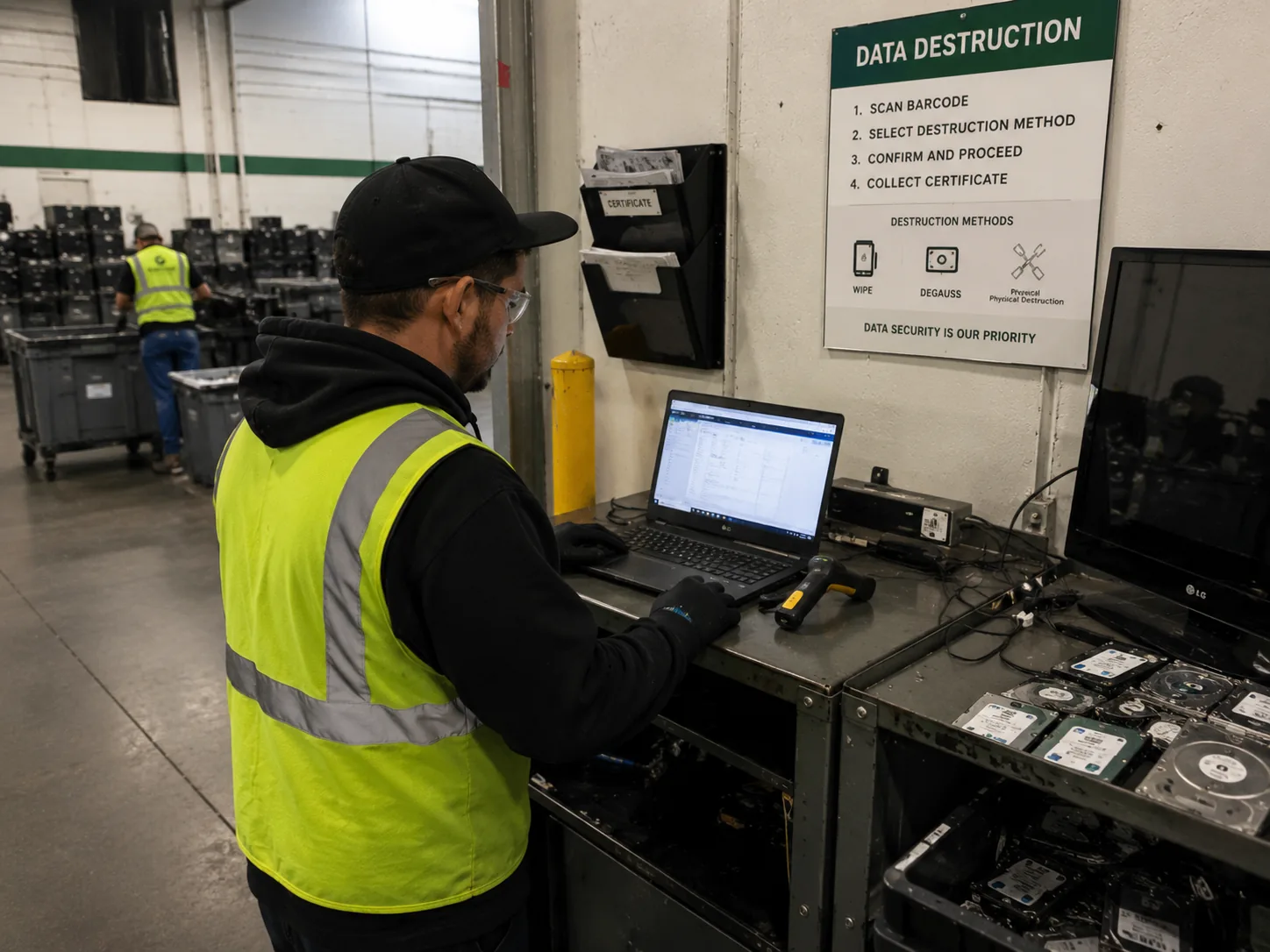
    Our team coordinates with your facility manager to pick up from hospitals, clinics, and multi-site health systems without disrupting patient care. A tamper-evident chain of custody begins at your loading dock.

  3. 3

    Destroy — physical destruction of all ePHI media

    Every data-bearing drive is physically shredded — not wiped, not degaussed alone. Physical destruction is the method OCR considers most defensible under HIPAA's physical safeguard requirements.

  4. 4

    Document — certificate and BAA for your compliance file

    A Certificate of Destruction is issued for every load. For covered entities, we execute a Business Associate Agreement (BAA) as required by HIPAA when a business associate may encounter ePHI.

Common Questions

Healthcare Disposal FAQ

HIPAA-Ready Pickup

Close the Loop on Every PHI-Bearing Device

We've worked with Chicago-area hospitals, multi-site medical groups, and specialty clinics — the paperwork process is designed around your compliance requirements.

HIPAABAA AvailableOCR-Defensible
  • HIPAA / FACTA Compliant
  • Free data destruction on pickups
  • Transparent, upfront pricing
Or call 866-770-2650

Proof of Compliance

Every processed load receives a fully auditable Certificate of Destruction, establishing a clear chain of custody for your compliance records.

CLIENT NOTE

They understood our HIPAA documentation requirements from the first call and had the BAA ready before pickup. Our compliance officer signed off without any back-and-forth.

IT Director

Multi-site outpatient clinic group, Chicagoland