
Technician placing a self-luminous exit sign into a protective transport case
NRC-Regulated Disposal

Tritium Exit Sign Disposal — Licensed & Compliant

Tritium exit signs contain radioactive gas regulated by the U.S. Nuclear Regulatory Commission. They cannot go in the trash, recycling, or standard e-waste. We coordinate compliant disposal through licensed channels — one sign or a full building.

NRC regulated10 CFR 31.5 pathway
Not with e-wasteSeparate licensed disposal
Facility docs providedInspector-ready records
Any quantityOne sign or full building
Why It's Different from All Other E-Waste

Tritium signs require a federal disposal pathway — not an e-waste bin

Tritium exit signs were widely installed in commercial and industrial buildings before LED technology made them obsolete. They produce their characteristic glow from tritium gas — a radioactive isotope of hydrogen regulated by the U.S. Nuclear Regulatory Commission — sealed inside glass tubes within the sign body.

Under 10 CFR 31.5, tritium signs are classified as self-luminous devices and cannot be placed in a dumpster, trash compactor, standard e-waste bin, or hazardous waste box. The NRC requires that they be returned to an authorized disposal facility. Improper disposal is a federal regulatory violation that can result in significant fines and remediation requirements.

AVA Recycling coordinates compliant disposal for buildings across the Chicago area. Whether you have one sign from a single-door swap or dozens from a complete building retrofit, we handle secure packaging, licensed transport, NRC-compliant transfer, and compliance documentation for your facility file.

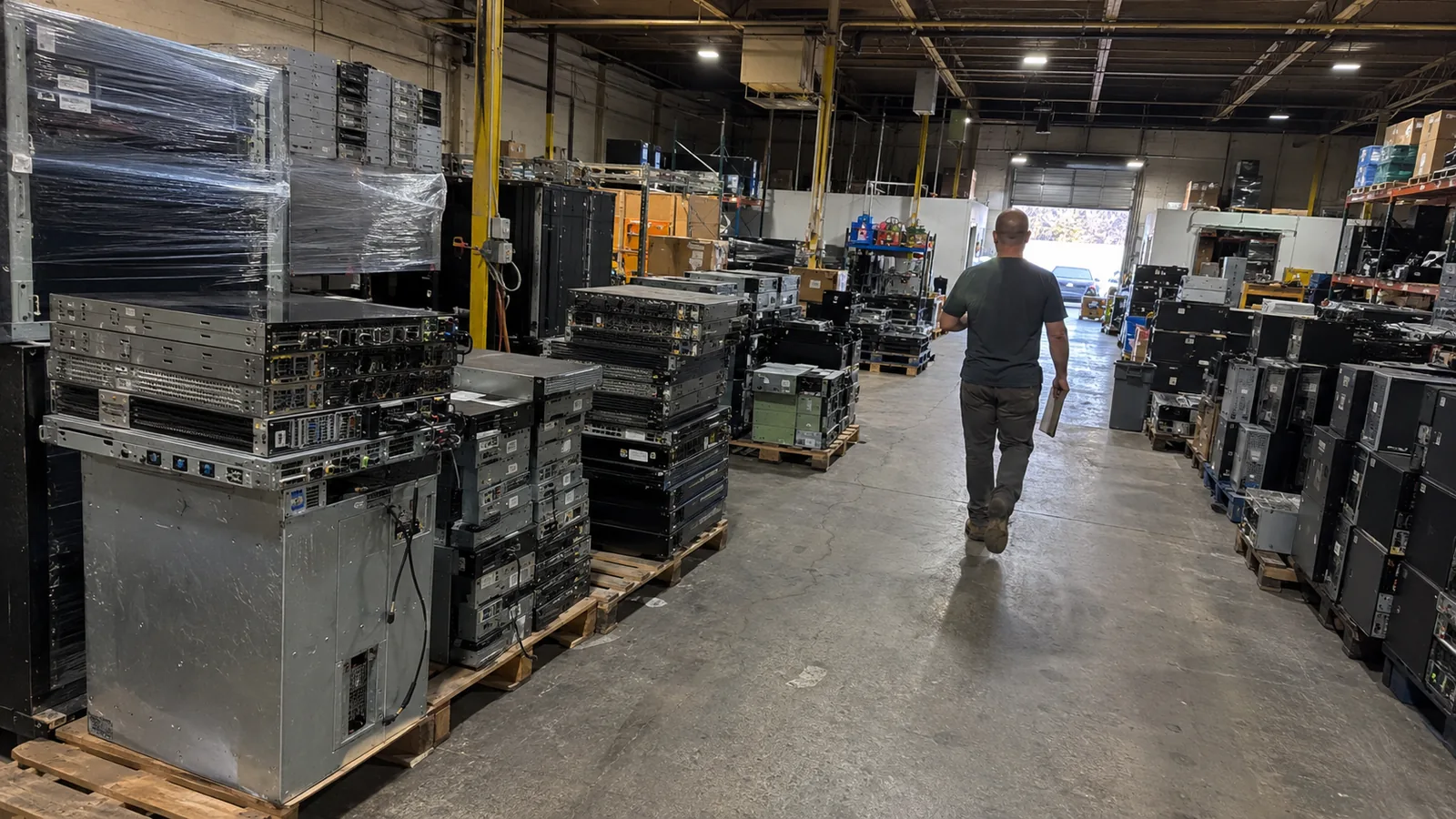
Organized electronics processing area prepared for compliant material handling
The Regulation

What the NRC requires — and what improper disposal costs

10 CFR 31.5
NRC general license governing tritium self-luminous devices — requires return to authorized disposal facility
U.S. Nuclear Regulatory Commission — Code of Federal Regulations
$10,000+
Potential NRC civil penalty per violation for improper disposal of tritium devices
10 CFR Part 2 — NRC Enforcement Policy
1 sign min
Minimum quantity — single-sign pickups accommodated with the same licensed process as full-building retrofits
Know What You Are Removing

A clear process for radioactive self-luminous devices

The safest project is one that separates tritium signs from ordinary e-waste before the first fixture comes down.

01

What makes a tritium sign different

A tritium exit sign is a self-luminous device, not ordinary illuminated signage. Small sealed glass tubes contain tritium gas that excites a phosphor coating and produces light without a wired power source. The sign may look like a normal EXIT fixture from the outside, but its radioactive material is why it must be handled through a dedicated disposal pathway.

The gas is contained when the sign is intact, and the presence of tritium does not mean a building needs to treat every sign as an emergency. It does mean a removed sign should not be placed in a dumpster, mixed e-waste pallet, scrap-metal bin, or lamp-recycling load. Separating these devices at the point of removal protects maintenance staff and keeps the facility's records accurate.

  • Self-luminous exit signs with tritium-filled glass tubes
  • Signs removed during LED retrofit, renovation, or demolition
  • Single signs, room-by-room replacements, and full-building projects

02

Planning a safe removal project

Before scheduling, count the signs and note where they are located. Tell us whether the signs are intact, cracked, water-damaged, or mixed with other emergency-lighting equipment. A basic inventory helps determine packaging, access, loading, and documentation needs before a technician arrives.

For a large retrofit, coordinate removal with the electrician or general contractor so tritium signs are collected separately from LED fixtures, batteries, fluorescent lamps, and general construction debris. AVA can coordinate the compliant pickup while your project team continues the replacement work. The final records can be kept with the building's environmental, insurance, and renovation documentation.

  • Quantity and pickup address confirmed in advance
  • Damaged or questionable devices identified before transport
  • Separate staging area away from ordinary recycling streams
Project Planning

From retrofit count to a complete compliance record

A professional removal project accounts for the device, the jobsite, the transport handoff, and the records that remain after the work is complete.

01

Before the fixture comes down

Create a simple count by floor, room, or building and keep the tritium signs separate from LED replacements and ordinary emergency-lighting hardware. Note damaged housings or signs that may have been exposed to water so the pickup can be planned around their condition.

If an electrician or general contractor is leading the retrofit, share the disposal plan before work begins. A clearly marked staging point prevents a sign from being swept into construction debris after it is removed.

02

During collection and transport

The pickup plan accounts for building access, loading-dock instructions, packaging, and the quantity of devices. A single sign can be scheduled, while a full-building replacement can be handled as a coordinated project with a single point of contact.

Tritium devices are kept out of ordinary e-waste, scrap, and lamp streams. Secure handling and the appropriate licensed pathway are planned before the material leaves the facility.

03

Records for the facility file

Keep the service request, pickup receipt, quantity, building location, and disposal documentation together with the renovation or environmental records. That gives facilities staff a clear answer if an inspector, owner, insurer, or future contractor asks what happened to the old signs.

For multi-building projects, location-level notes make it easier to reconcile the number removed with the number sent for compliant disposal. The final record should be retained according to the building's own document-retention policy.

04

Coordinate the LED replacement

Replacing tritium signs is often part of a larger life-safety or energy-efficiency project. Schedule removal around the electrician's work so the old signs are not left in corridors, mechanical rooms, or unsecured jobsite areas after the new fixtures are installed.

AVA can focus on the disposal scope while your electrical contractor handles installation. Separating those responsibilities makes the handoff clear and keeps the radioactive devices from being treated as ordinary recyclable fixtures.

Facility Handoff

Keep the removed signs visible and accounted for

A marked staging area gives the electrician, facilities team, and disposal coordinator the same understanding of what is ready for pickup.

Tritium signs should be staged as a clearly identified material stream, away from ordinary lamps, scrap metal, and construction debris. That simple separation is especially important on active renovation sites where several crews may be moving fixtures at the same time.

An inventory by floor or building makes a full retrofit easier to reconcile. It also gives the property team a practical record to retain with the work order, safety documentation, and final licensed-disposal paperwork.

Electronics inventory organized for documented facility pickup
How It Works

From building to compliant disposal

  1. 1

    Call — tell us your quantity and building type

    Single sign or full-building retrofit — the process is the same. We confirm the quantity, location, and whether any signs are cracked or damaged, which affects packaging requirements for transport.

  2. 2

    Pickup — secure packaging and transport

    Tritium signs are packaged according to DOT regulations for radioactive material transport. We provide packaging materials and coordinate transport through the proper licensed channels — not with standard e-waste.

  3. 3

    Transfer — NRC-licensed disposal pathway

    Signs are transferred to an NRC-licensed disposal facility as required under 10 CFR 31.5. The radioactive tritium gas is properly handled and contained — not released or landfilled.

  4. 4

    Document — compliance records for your facility file

    You receive documentation confirming proper transfer to a licensed disposal pathway. This is the record to present to building inspectors, NRC auditors, or insurance requirements if requested.

Common Questions

Tritium Sign Disposal FAQ

Schedule Removal

Schedule Tritium Sign Removal

Tell us how many signs you're replacing and we'll coordinate compliant pickup, licensed transport, and disposal documentation.

NRC Compliant10 CFR 31.5
  • HIPAA / FACTA Compliant
  • Free data destruction on pickups
  • Transparent, upfront pricing
Or call 866-770-2650

Proof of Compliance

Every processed load receives a fully auditable Certificate of Destruction, establishing a clear chain of custody for your compliance records.